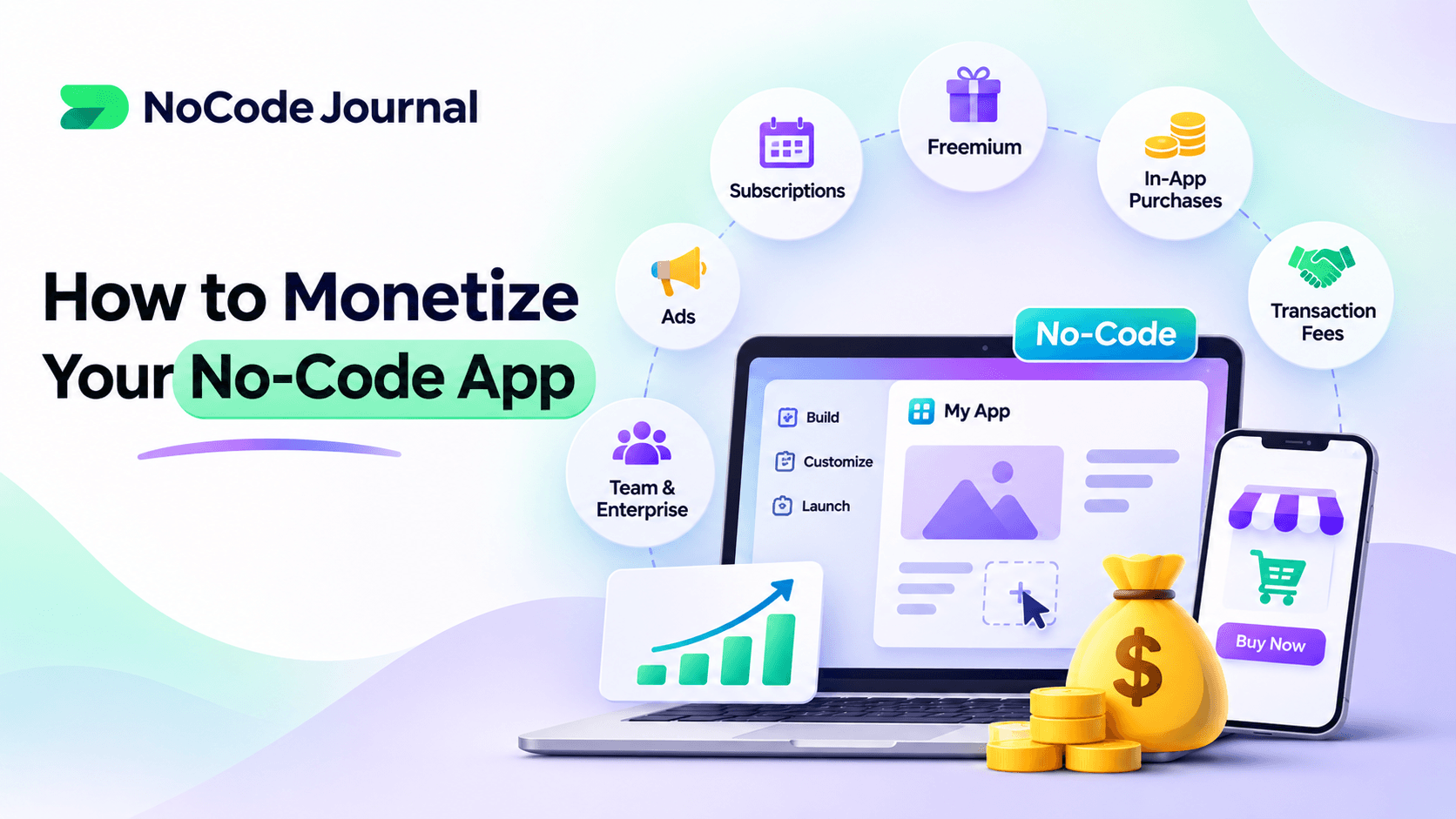
Building an application no longer requires years of programming experience. Modern visual development platforms allow entrepreneurs, creators, and small businesses to launch useful products quickly. Yet releasing an app is only the beginning. To create a sustainable business, you need a monetization strategy that customers understand and willingly support.
The best revenue model depends on your audience, the problem your app solves, and how frequently people use it. A productivity tool may benefit from subscriptions, while a booking marketplace might earn transaction fees. This guide explains how to monetize your no-code app, select suitable payment tools, and grow revenue without damaging user trust.
Understand Your Users Before Choosing a Revenue Model
Start by identifying the specific value your app provides. Does it save users time, help them earn money, organize information, or connect with other people? The clearer the benefit, the easier it becomes to determine what customers will pay for.
Interview potential users about their current solutions, frustrations, and budgets. People may praise an idea but decline to purchase it.
Also estimate ongoing costs, including platform subscriptions, database usage, automation tasks, payment processing, customer support, and marketing.
1. Offer Paid Subscriptions
Subscriptions work well when your app delivers recurring benefits. Examples include team dashboards, appointment management, learning resources, and customer relationship tools. Users pay monthly or annually to keep accessing the service.
Create plans around meaningful differences, such as project limits, collaboration features, reporting, or customer support. Avoid arbitrary restrictions that make the basic product unusable. Show the price, billing period, included features, renewal terms, and cancellation options clearly.
A no-code app builder may integrate with subscription billing services, but verify the exact capabilities before launching. Test upgrades, downgrades, failed payments, cancellations, and account access after expiry.
2. Use a Freemium Model
The freemium model gives users meaningful functionality without payment and charges for additional value.
For example, a project management app might include three free projects and charge for unlimited projects, advanced reporting, or additional collaborators. A design tool could offer basic templates while reserving premium assets for paying users.
Free access should demonstrate the product's core value rather than frustrate people into upgrading. Identify the moment when users naturally need more capacity or capabilities. Then present the paid option in context. Measure activation, free-to-paid conversion, and retention to confirm that the model supports sustainable growth.
3. Charge One-Time Purchase Fees
Not every application needs subscriptions. Some products deliver a complete, largely self-contained benefit through a single purchase. Examples include calculators, specialized templates, reference tools, and downloadable resources.
It can also simplify marketing because buyers understand what they receive immediately.
However, ongoing maintenance and infrastructure expenses continue after the initial sale. Price accordingly, define what updates are included, and consider optional paid upgrades when you release substantial new functionality. Do not promise unlimited future services unless you can realistically support them.
For mobile applications, review the distribution platform's purchase requirements before implementing checkout.
4. Earn Revenue From In-App Purchases
In-app purchases allow users to buy specific features, content, credits, or additional capacity when they need them. This approach works when customers receive value in distinct units rather than through continuous access.
An educational app might sell individual courses. A business tool could offer extra export credits or specialized report packs.
Avoid confusing bundles and aggressive prompts. Users should know exactly what they are purchasing. If your app runs through Apple or Google app stores, check the applicable rules for digital goods and subscriptions. Payment options and exceptions can differ by region, product, and distribution method.
5. Monetize Through Transaction Fees
Marketplace applications can earn revenue whenever buyers and sellers complete transactions. A service booking app, rental platform, or niche marketplace might charge a percentage commission or fixed transaction fee.
Decide which party pays fees, how refunds work, and when sellers receive payouts.
Payment providers such as Stripe Connect offer marketplace capabilities where available, including connected accounts and payout workflows. Availability, onboarding, and verification requirements depend on jurisdiction and business model.
Do not assume your no-code platform supports every payment configuration. Test real transaction scenarios in a sandbox and document your dispute and refund procedures before accepting customers.
6. Introduce Usage-Based Pricing
Usage-based pricing charges customers according to consumption, such as generated reports, processed documents, API calls, or automated tasks. It can fit apps where different users consume dramatically different resources.
This model allows occasional users to pay less while heavier users contribute more toward operating expenses. However, unpredictable bills may discourage adoption.
Use transparent units, visible usage dashboards, alerts, and optional spending limits. Explain what happens when a customer reaches a threshold. Consider including a predictable allowance in a base subscription, followed by measured additional charges.
Calculate the cost of each action, including third-party AI services or automation tools. A popular feature can become unprofitable if its underlying usage costs exceed the revenue it generates.
7. Display Relevant Advertising
Advertising may suit free applications with substantial, regular engagement. Community directories, content platforms, and informational tools can sometimes generate revenue through carefully selected placements.
Revenue depends on audience size, location, engagement, advertiser demand, and the formats permitted by your distribution channels. A small app with infrequent visits should not expect advertising alone to fund meaningful operations.
Keep advertisements clearly distinguishable from content. Avoid disruptive placements that interrupt important tasks or mislead users into clicking. Evaluate privacy and consent obligations before integrating advertising or tracking technologies.
Advertising should complement the product experience, not overwhelm it. If user trust declines, short-term ad income may lead to weaker retention and lower long-term revenue.
8. Offer Premium Services and Customization
Some users will pay more for help implementing an app or adapting it to their organization. You can sell onboarding assistance, data migration, training, custom dashboards, or premium support alongside the standard software.
This approach is especially relevant for business-focused apps because organizations often value successful implementation as much as the software itself.
Define service scope, deliverables, timelines, and support boundaries before quoting a price. Distinguish recurring software fees from one-time professional services.
Customization can produce valuable early revenue, but excessive bespoke work may distract from improving your core product. Track the time and expense of each engagement, and convert repeat requests into standardized features whenever practical.
9. Build Affiliate and Referral Revenue
An app can earn affiliate commissions by recommending relevant third-party products or services. For instance, a business planning tool might introduce users to compatible scheduling or invoicing solutions.
Recommendations must genuinely support the customer's goals. Disclose financial relationships clearly and avoid ranking products solely by commission size. Check affiliate program terms and geographic availability.
You can also use referral incentives to acquire customers for your own app. Offer rewards when referred users complete a meaningful action, such as a qualifying paid subscription, rather than rewarding empty signups.
Track referral quality, fraud, customer acquisition costs, and retention. A referral program succeeds when it brings users who genuinely benefit from the application.
10. Sell Team and Enterprise Plans
Individual users may begin with an inexpensive subscription, while organizations often need broader capabilities. Team plans can include shared workspaces, centralized billing, permissions, audit trails, and administrator controls.
Enterprise customers may also require security documentation, service commitments, onboarding support, or procurement assistance. Offer these features only when your application can reliably deliver them.
Consider pricing based on seats, usage, or a combination that reflects customer value. Avoid hiding essential charges in complicated contracts. Business buyers appreciate clear limitations, predictable costs, and straightforward renewal terms.
Start with smaller teams before pursuing complex enterprise accounts.
Choose Payment Tools That Fit Your App
Selecting a payment provider is a technical and commercial decision. For web applications, options such as Stripe Payment Links or compatible checkout integrations may simplify collecting payments, depending on supported countries and products.
For native mobile apps, Apple App Store and Google Play policies may require their billing systems for certain digital purchases, with specific exceptions. Never assume that an external checkout permitted on the web is automatically acceptable inside a mobile app.
Review tax handling, invoices, refunds, recurring billing, identity verification, and reporting. Protect customer data and verify webhooks before unlocking paid access. No-code development reduces programming effort, but does not remove responsibility for accurate payment workflows.
Test Your Pricing Before Scaling
Launch with one primary revenue model and a small set of understandable plans. Too many options can confuse customers and make results difficult to interpret.
Test different value propositions, onboarding messages, and prices with appropriate customer groups. Track conversion rate, average revenue per paying user, customer acquisition cost, retention, refunds, and profit margins.
Use a marketing funnel without code to connect a landing page, signup process, onboarding emails, and checkout. Then identify where potential customers abandon the journey.
Look beyond initial sales. A pricing change that lifts conversions but sharply increases cancellations may weaken the business. Combine analytics with customer conversations to understand why people purchase, upgrade, downgrade, or leave.
Common Monetization Mistakes to Avoid
A frequent mistake is charging before demonstrating enough value. Another is providing unlimited expensive features at a fixed low price without understanding costs.
Founders also underestimate support requests, payment disputes, marketing expenses, and platform usage limits. Treat free users as part of your cost model rather than assuming they are costless.
Avoid deceptive trial terms, confusing cancellation flows, and sudden feature removals. Keep pricing consistent across marketing pages and checkout screens. Test billing workflows after major platform updates and explain important changes before they affect customers.
Conclusion
Learning how to monetize your no-code app requires more than adding a payment button. Start with a clearly defined audience, a valuable problem, and realistic operating costs. Choose the revenue model that best matches how customers experience benefits, whether through subscriptions, freemium upgrades, transactions, one-time purchases, or services.
Keep payment processes reliable, pricing transparent, and user trust central to every decision. Measure retention and profitability alongside revenue, then refine your approach as real customer behavior becomes clearer. A well-monetized no-code app is not simply one that charges users. It is one that delivers enough consistent value for customers to choose paying for it.